Process serves restoration
Incident process matters, but the goal is not ceremony. The goal is to restore service, protect the business, and learn.
A new operating model for incident leadership
TIM is the practical evolution of ITSM incident discipline for leaner teams, more complex systems, AI-assisted operations, and faster restoration expectations.
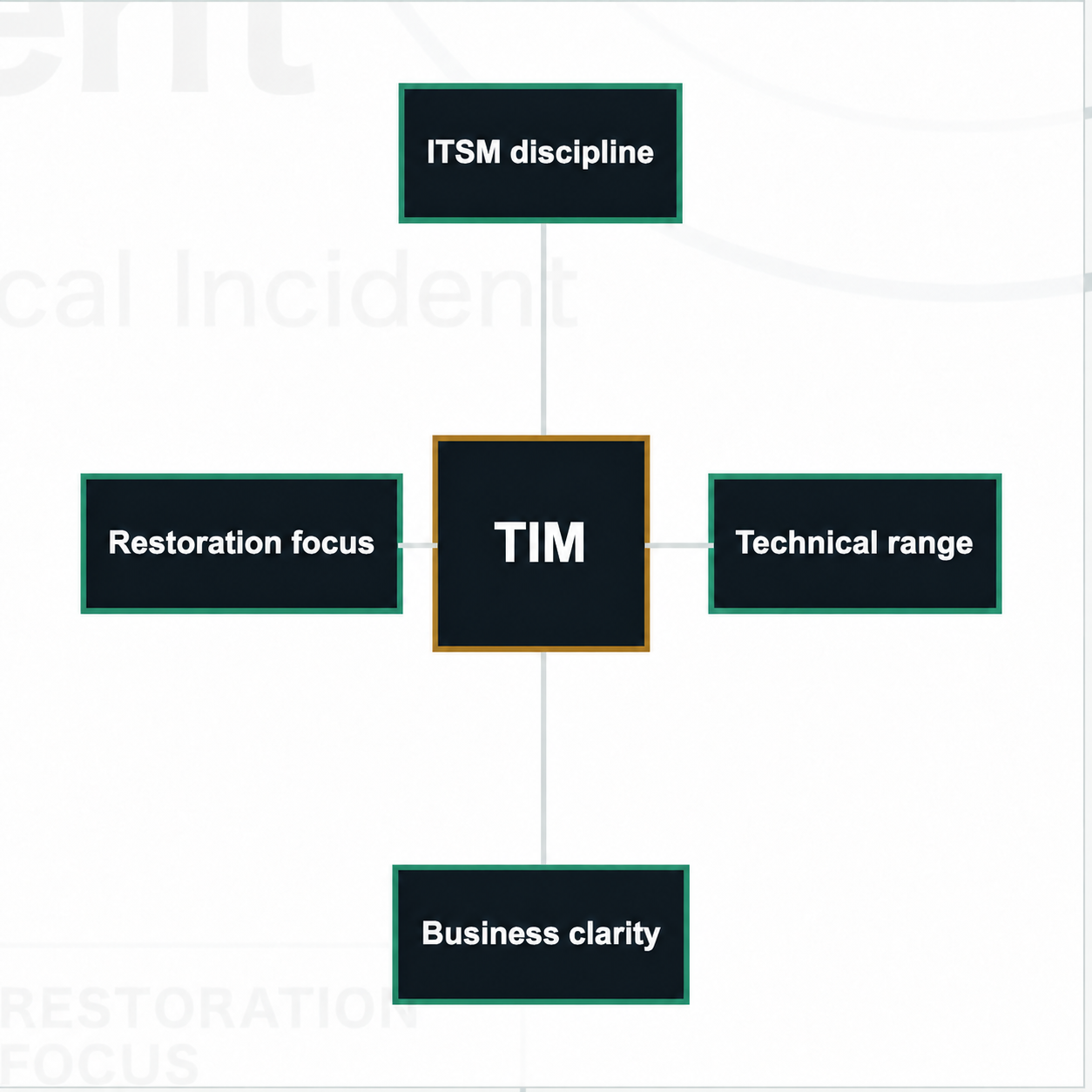
The TIM Institute exists to define, teach, and certify a more technical, resolution-focused approach to incident leadership. The TIM is not anti-ITIL. TIM is what incident management becomes when process, technical fluency, communication, and operational judgment are brought back together.
Methodology
Incident process matters, but the goal is not ceremony. The goal is to restore service, protect the business, and learn.
A TIM does not replace specialists, but they understand enough networking, systems, cloud, data, and application flow to ask better questions.
Clear updates, action ownership, and leadership translation keep the bridge from becoming status theater.
AI can summarize, correlate, and draft. The TIM owns validation, risk, context, and restoration decisions.
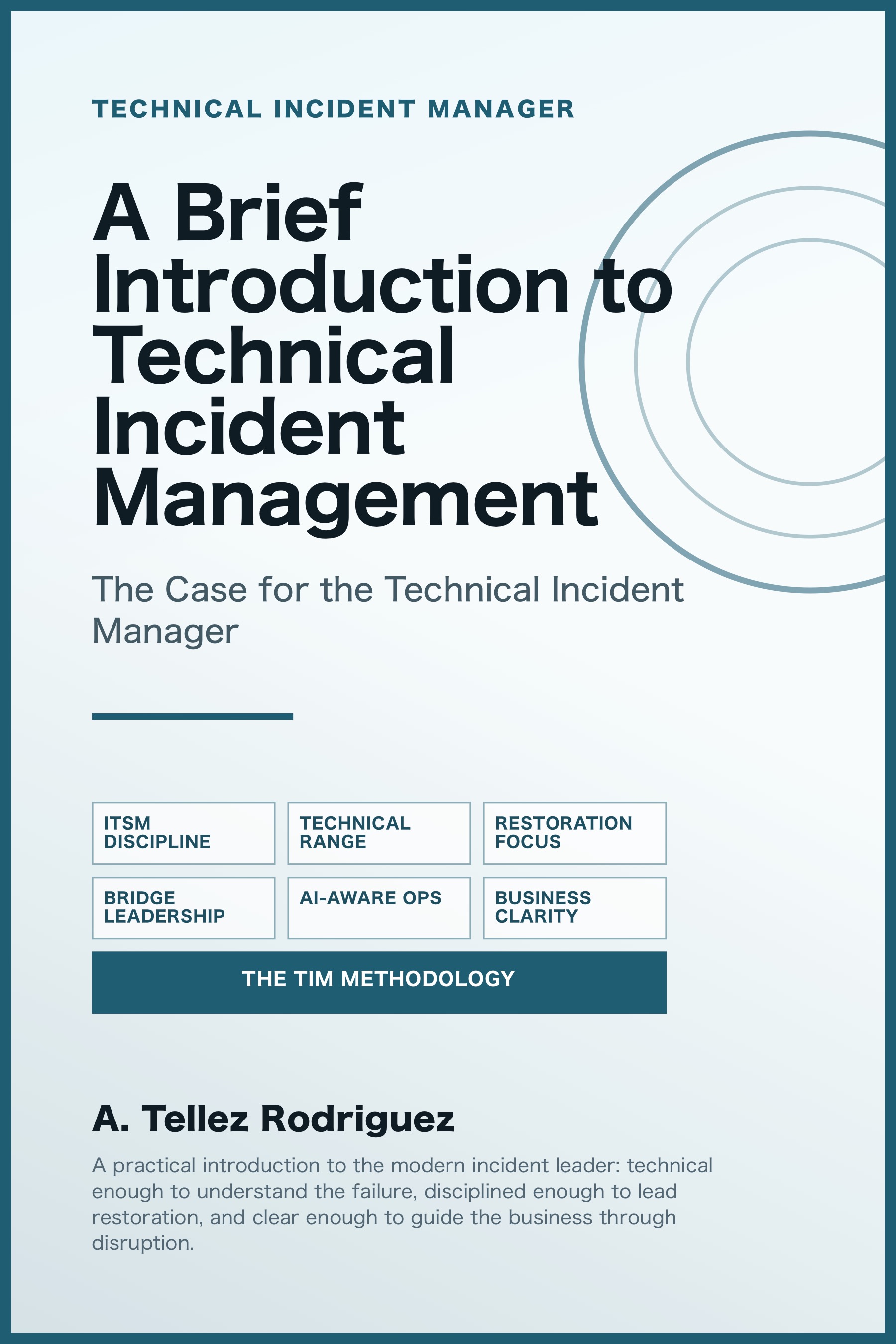
The first TIM publication
The first book introduces the TIM role, the pressure on traditional incident management, the value of technical range, and the path from process-driven coordination toward resolution-focused incident leadership.
Amazon KDP release in progress under A. Tellez Rodriguez.
Certification direction
TIM certification should prove judgment under incident pressure: technical reasoning, bridge leadership, stakeholder updates, and post-incident learning.
Foundations: concepts, incident lifecycle, bridge basics, communication, and technical literacy.
Practitioner: simulated bridge leadership, cross-domain triage, action ownership, and stakeholder updates.
Lead: simultaneous incidents, program design, access governance, and operational improvement planning.
Brand architecture
Standards, methodology, publications, certification, and the public definition of Technical Incident Management.
Training, labs, cohorts, practical curriculum, and entry-to-practitioner learning paths.
Consulting, implementation, incident-process modernization, AI-assisted operations, and technical services. Ti-Cool Brasil (Português).